Disability Claims for Cancer Survivors: When Treatment Ends but the Side Effects Don’t
For many people, completing cancer treatment is a significant milestone—often celebrated as a return to “normal life.” But for countless survivors, that moment is followed not by relief, but by...
The Fine Print of Policy Language: How Disability Insurers Use Ambiguities to Their Advantage
Disability insurance policies contain terms that appear clear at first glance—phrases like “own occupation,” “reasonable care,” and “ongoing proof of loss.” However, these seemingly straightforward terms can carry hidden meanings...
Understanding Elimination Periods and Benefit Triggers in Long-Term Care Policies
Long-term care insurance is designed to offer peace of mind as you or a loved one ages and begins to need help with everyday activities. However, when the time comes...
I was so scared when my disability insurance company denied my claim. I had no idea how to prepare an appeal. I thought I would lose my house. They walked...
Former Client
I contacted Disability Insurance Law Group and they have been taking care of me since that first call. Alicia and her staff fought for me and kept me informed at...
Ms. B.
As a practicing general dentist for 35 years I did all the right things I was told to do by advisors. When I became unable to practice dentistry after a...
Dr. S.
My experience being a client of Ms. Mindy Chmielarz of Disability Insurance Law Group: I contacted Mindy from an advertisement after reviewing her AV rated status from her legal peers on...
Dr. JM
I realized one year ago I was going to need to file my disability claim and was urgently in need of expert legal counsel. My claim was extremely complicated and...
Dr. FM
am very grateful to Mindy Chmielarz for helping me with my disability claim. She is extremely experienced and knowledgeable in disability law. She was a tremendous asset and it was...
BT
I worked as a teacher for 15 years. I was in a car accident and despite 3 surgeries, I remained in constant pain. I filed my claim for disability insurance...
Paula R.
I struggled to continue to practice as a dentist after I was diagnosed with MS. After I developed a tremor in my hands, I knew I could no longer treat...
Dr. G.
I never imagined that I would have to discontinue my medical practice due to a disability. Unfortunately it happened, but I had appropriate disability insurance coverage. I knew that proper...
We understand that accidental death & dismemberment (AD&D) claims are typically highly scrutinized and fiercely disputed by insurance companies — even though these traumatic incidents are exactly when policyholders need their insurance coverage the most.
While facing a catastrophic injury or the death of a loved one, AD&D claimants often find themselves in a heated uphill battle against the very insurance company that was supposed to take care of them. The resounding response policyholders have to the insurance company’s opposition is simply, “This is not fair.” We could not agree more.
Our accidental death & dismemberment claims lawyers located in Broward County may call Florida home, but it is our goal and sincere hope that we can help as many people as possible across the country, so they can overcome these significant obstacles, and reclaim their lives.
If you have suffered a dismembering injury, or lost a loved one to an accidental death anywhere in the U.S., contact us today to get the help you need to pursue your insurance company for the benefits you need to move forward.
What is Accidental Death and Dismemberment Insurance Coverage?
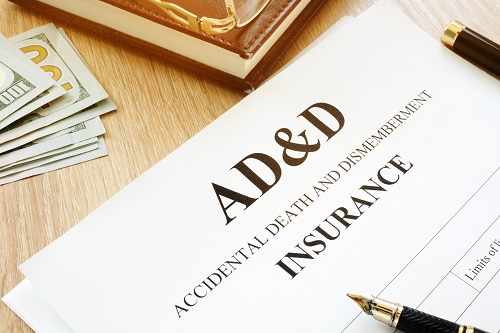
Accidental death and dismemberment insurance is a voluntary benefit intended to supplement life insurance coverage. AD&D coverage can help to offset costs or lost wages due to certain serious and irreversible injuries or death.
AD&D coverage typically only pays benefits when the insured is in a covered accident that causes death or specific serious injuries that result in the loss of a limb, partial or permanent paralysis, or blindness. The types and extent of injuries covered are particular to and defined by each insurer and policy.
What Types of Accidents Will AD&D Insurance Cover?
AD&D coverage will be specified in the policy and may vary by insurer, which may include the loss of a limb, serious accidental trauma that prevents the policyholder from working, or death.
Common accidents covered by AD&D insurance may include:
Car accidents.
Crushed by fallen objects.
Falls and other injurious accidents.
Fare-paying passenger death on buses, trains, taxis, ferries, airplanes, and other public transportation.
Fire-related injuries or fatalities.
Lightning strikes.
Murder.
Workplace injuries or death.
There are some important exclusions to AD&D policies that vary from insurer to insurer, so it is important to review your coverage thoroughly to ensure you and your family understand the terms of the agreement. We can help. No matter where you live or work in the U.S., contact our Florida AD&D insurance claims attorneys today to discuss your needs during a free consultation.
Who Can Benefit From Accidental Death & Dismemberment Insurance Coverage?
AD&D coverage may be purchased as a standalone policy, or it may be added to a standard life insurance policy as a rider. A “rider” policy can be added to a standard life insurance policy to increase the benefits if a covered accident results in death or a qualifying dismemberment injury.
Voluntary accidental death and dismemberment insurance tends to be most popular with those who live or work in dangerous jobs, which may include but are not limited to:
Landscaping, lawn service, and groundskeeping workers.
Logging.
Manufacturing.
Police.
Refuse and recyclable material collectors and processors.
Roofing.
Structural iron and steel workers.
Truck drivers.
If you or a loved one carried AD&D insurance and were in a covered accident where you suffered a qualifying injury or death and your claim is being challenged by the insurance company, we want to help. No matter where you live or work in the United States, our experienced accidental death & dismemberment attorneys in Florida can help you understand what your coverage means, and how we can pursue your policy for the best outcome.
Why are Accidental Death and Dismemberment Claims Denied?
Frequently, accidental death & dismemberment insurance claims are denied because they pose a significant financial liability for insurance companies.
The most common reasons insurance companies assert when denying AD&D claims are:
The death was not the result of an accident.
The claim is based on an illness, not an accident.
The injuries at issue do not meet the criteria in the policy for covered dismemberments.
The employee was not appropriately enrolled in the employer-provided group AD&D plan.
The legal team at Disability Insurance Law Group will aggressively fight to obtain the AD&D benefits you deserve and to hold your insurance company accountable for the coverage it promised. AD&D insurance companies have a team of attorneys at their disposal, and you can too.
Contact our skilled accidental death & dismemberment attorneys in Florida today by calling 954-989-9000 or contact us online to schedule a completely free and confidential case assessment, so we can put our over 50 years of combined experience to work for you.
Frequently Asked Questions For Our Accident Death & Dismemberment Claims Attorneys In Florida
What is the Difference Between Life Insurance and AD&D Insurance?
Accidental death and dismemberment coverage only pays a benefit if the death results from a covered accident or upon the loss or use of a limb, or other qualifying injury. Life insurance policies pay benefits upon the death of the insured, despite how the death occurred — although exceptions apply, depending on the insurance company and the policy terms.
Do I Need Both Life Insurance and AD&D Insurance?
It depends. All insurance coverage requirements are unique to the policyholder. If your life insurance has adequate coverage for accidental dismemberment or death, you may not need to add AD&D coverage. However, if you are in a high-risk profession, it may be worth the additional expense. Speak with a licensed insurance agent to determine what coverage is recommended for your specific situation.
How is AD&D Compensation Calculated?
The calculation method for AD&D compensation may vary by insurance provider and the policy’s terms. Typically, AD&D coverage will pay out 100% of its value in the event of a covered accidental death. If an individual is dismembered, the policy will typically pay out on a per-member basis. It is important to confirm amounts and circumstances with your provider to determine how your policy is structured for compensation, so there are no surprises should you need to pursue the coverage later.
What Causes of Death are Excluded from AD&D Policy Payments?
Exclusions to AD&D policies vary from insurer to insurer.
Generally, the following causes of death will be excluded from payment:
Car racing, skydiving, scuba diving, or any other high-risk activity that is not job-related.
Committing a crime.
Driving while under the influence of alcohol or drugs.
Drug overdoses.
Illnesses, including bacterial infections, cancer, or diabetes.
Professional athlete during a sporting event.
Suicide, or death as the result of mental illness.
Surgery.
War.
Who Can Pursue an AD&D Claim After Losing a Loved One?
Whoever is listed as the beneficiary on the AD&D insurance policy is the person who will receive the proceeds of the AD&D insurance coverage should an individual lose their life during a covered accident.
Do You Need Legal Counsel? We Invite You To Contact Us For A Free Consultation.
Fill out the form and we’ll be in touch with you shortly, or call us now at 954-989-9000.